November 11 2026
On Deck… with Unstoppable Tracy!
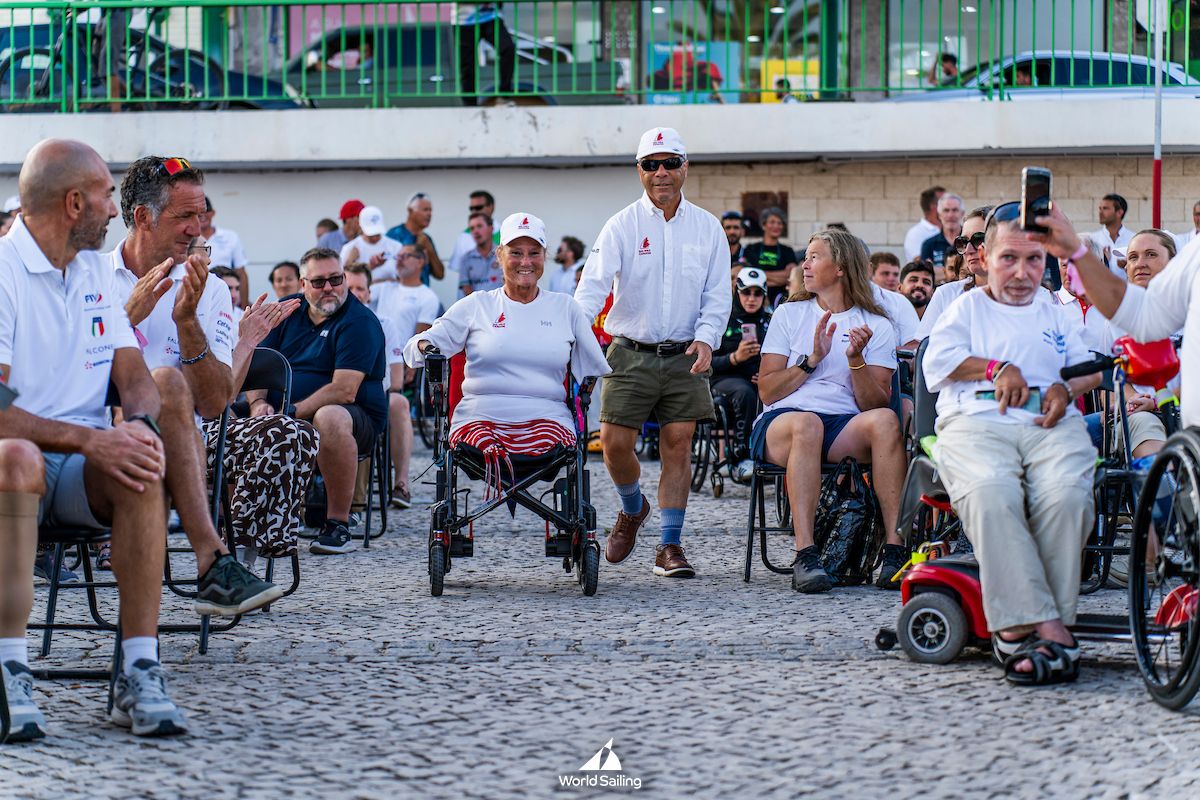
Photo credit: World Sailing / Gonçalo Melo Reis
What makes Tracy Schmitt unstoppable isn’t her tenacity as much as it is her authenticity. Her belief in adapted sailing and commitment to improving this community are well known, but witnessing that passion firsthand is something quite different.
Tracy shares what it was like to compete internationally, what she took away from the experience, and why opportunities like these matter for the future of adapted sailing.
1. What was the most meaningful part of your experience competing at the Inclusion Championships in Portugal?
One of the most valuable opportunities in international sailing is World Sailing's International Development Program (IDP). Ahead of a world championship, the program brings in experienced international coaches, often people who have coached winning teams at the Paralympics and other major sailing events. You get coaching to help you prepare for the competition, become familiar with the water and the boat, and understand the sailing instructions. Just as importantly, you have someone in your corner on the water before, during, and after racing.
When the pressure builds, having a coach who knows you and understands what you're working on is invaluable. They can help you process what happened in a race, identify learning opportunities, and figure out what to take into the next one. It's not just about improving your results at one regatta. It's about becoming a better sailor for every race that follows.
My favourite part of the experience was working with Grant, the IDP coach. He had coached at the Hansa Worlds in Australia in 2025 and was coaching again at the 2026 Worlds in Portugal, this time in the RS Venture Connect. These are two boats I don't have access to in Canada, so getting the opportunity to sail them with expert coaching was a huge deal for me.
In Europe, sailors often have access to regular club racing, boat-on-boat training, and a circuit of events where they can develop their skills over time. That may sound ordinary to some sailors, but when you live in Canada and have to factor in international flights, accommodation, and all the associated costs, getting that kind of experience is a very different proposition.
That's one of the things that makes events like AbleSail and Mobility Cup so important. AbleSail provides opportunities to get into a boat, get on the water, and develop your skills. Mobility Cup gives us incredible exposure to different boats on the same starting line, along with the chance to connect with passionate sailors from across Canada. And if we're lucky enough to catch Karen Ann Xavier when she's not busy fixing boats, we have an extraordinary resource in Canada for the Martin 16.
But the IDP offers something particularly special: the chance to sail a world-championship boat you may never otherwise get to try, race boat-on-boat in a training environment, and have a coach specifically focused on your development.
Time on the water is always an opportunity to grow. But time on the water with the right coaching, in an unfamiliar boat, alongside other competitive sailors? That's an opportunity to take your sailing to another level.
2. Were you racing alongside sailors with different classifications? How were sailors grouped in fleets for the competition?
Absolutely! The Inclusion Championships brought together sailors with a wide range of disabilities and abilities, and that was one of the interesting things about the event.
There were eight boat classes, including the Hansa 303 in both single-handed and two-person fleets, the single-handed 2.4mR, Challenger catamarans, kite foiling, and the ILCA (formerly known as the Laser), of course, the Rs Venture Connect.
The event was inclusive in more than just its name. Some classes included sailors with and without disabilities competing together. In some two-person boats, one sailor had a disability and the other was able-bodied. This was referred to as the inclusive class. Other boats had two sailors with disabilities.
At the time of the championship, the system was essentially based on whether a sailor had a qualifying disability rather than a detailed classification system that accounted for the impact of different disabilities on sailing performance. More specific classifications are now coming back into the conversation as the sport looks toward the possibility of returning to the Paralympics.
One thing that stood out to me was just how much variety there is in adaptive sailing. Different boats offer different ways to participate, depending on your mobility, your abilities, and how you want to sail. You can sail solo, work as part of a two-person team, or even compete in a foiling discipline.
Adaptive sailing isn't one boat or one way of sailing. There's a whole world of possibilities, and finding the right boat can open up a completely new world on the water.
For anyone with a disability who is curious about sailing, I'd encourage them not to assume that one particular boat—or one particular way of sailing—is their only option.
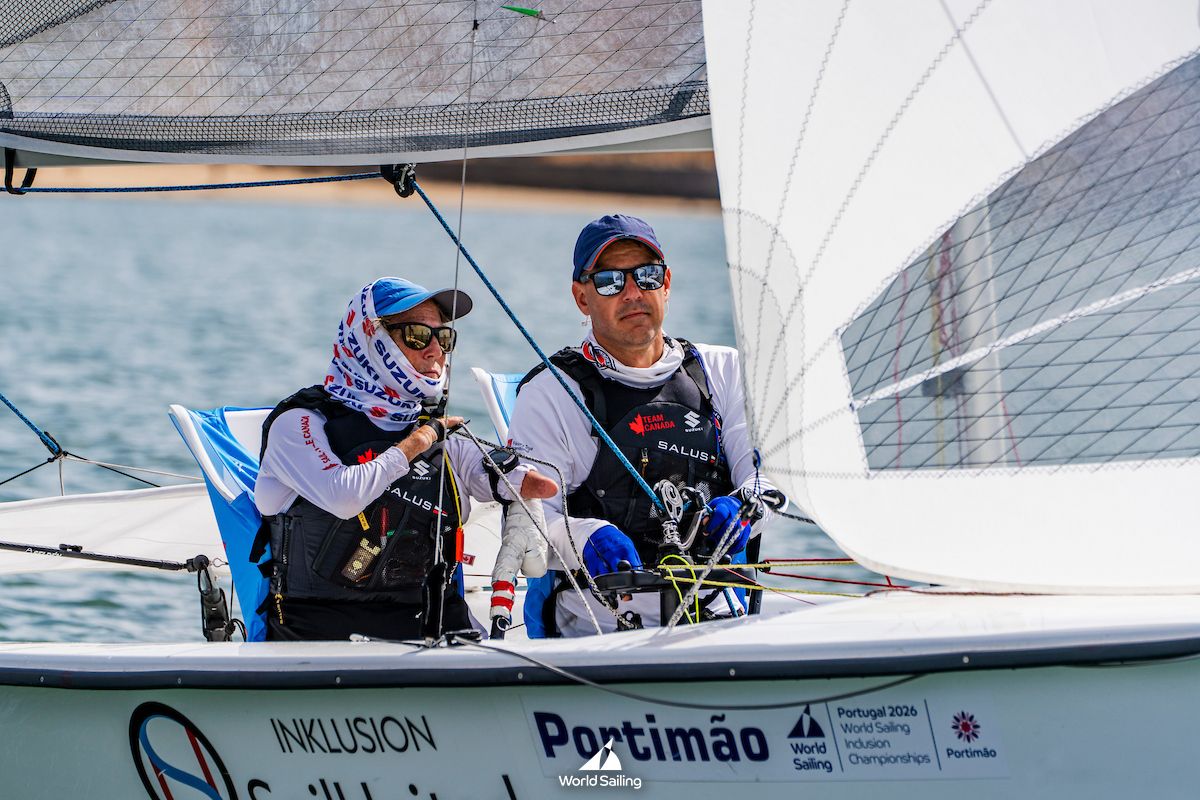
Photo credit: World Sailing / Gonçalo Melo Reis